Chinese Dining Etiquette
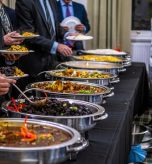
If you are flying to China to meet a supplier, walk a factory floor or work a trade fair, some of the most important conversations of your trip will happen at a dinner table rather than in a meeting room.
That is not a figure of speech. In China, the shared meal is where a commercial relationship is tested and often where it is settled. Deals that stall over email get unlocked over a rotating tabletop of shared dishes, which makes Chinese dining etiquette a working skill for anyone sourcing or manufacturing in China, not trivia for tourists.
We have had people on the ground in China since 2003, with offices in Shenzhen and Ningbo, and our teams eat with suppliers every week. This guide covers the table manners that matter, what to expect regionally, and the mistakes we most often see international visitors make.
Why Chinese dining etiquette matters in business
Western business culture tends to treat dinner as a reward that follows the deal. Chinese business culture often reverses that order: the meal comes first, and the deal follows from the relationship it builds.
The meal is part of the negotiation. A supplier who invites you to dinner is investing in the relationship. Declining without good reason reads as a lack of seriousness about the partnership.
Real information surfaces at the table. Capacity constraints, tooling concerns, a candid view on lead times are topics that are frequently raised over dinner in a way they would not be in a formal meeting.
Etiquette signals respect, and respect signals reliability. You are not expected to get everything right, only to have made the effort. A visitor who knows not to plant their chopsticks upright in a rice bowl has clearly prepared and that impression carries into the rest of the commercial relationship.
Customs vary in emphasis by region. For example, toasting is heavier in the north, tea rituals more elaborate in the south. But the core principles of Chinese etiquette for eating and drinking such as deference to seniority, generosity from the host and food shared rather than portioned are important everywhere.
Essential Chinese table manners every business traveller should know
These are the Chinese table manners worth knowing before your first supplier dinner.
- Wait for the host. Nobody eats until the host invites the table to start, usually with a short welcome or a first toast. If you are unsure who the host is, it is whoever arranged the meal and will be paying.
- Understand the seating plan. Seating at a round table is not casual. The guest of honour sits facing the door, furthest from it; the host sits opposite, nearest the entrance, so they can manage the service and settle the bill discreetly. Seniority radiates outward from the guest of honour. Do not choose your own seat — wait to be placed, and accept the seat offered even if it feels more prominent than you expected.
- Handle chopsticks correctly. Hold them at the upper third, keep the lower stick still and move the upper one. Do not spear food, wave them while talking, or tap them against your bowl as this gesture is associated with begging and reads as rude.
- Never stand chopsticks upright in rice. This is the single most important thing to avoid. Vertical chopsticks in a bowl of rice resemble incense sticks burned at funerals, and it is genuinely unsettling at a business dinner. Rest them on the chopstick rest, or lay them flat across the edge of your plate.
- Expect to share. Dishes arrive for the table, not for individuals. Take modest amounts from the dishes nearest you and let the plates come around rather than reaching across the table.
- Use the serving chopsticks. Most restaurants now provide separate serving chopsticks or spoons (公筷, gōngkuài). Use them for the communal dishes. This became near-universal after 2020 and is now the expected standard in business settings.
- Rotate the lazy Susan clockwise, and check first. Turn it slowly, in one direction, and never while someone else is mid-serve. If a new dish arrives, it is courteous to rotate it to the guest of honour first.
- Learn two toasting words. Gānbēi (干杯) literally means “dry the cup” which is an invitation to empty your glass. Suíyì (随意) means “as you like” and signals you may sip instead. When clinking with someone senior, hold your glass slightly lower than theirs; it is a small gesture of deference and it is noticed. If you would rather not drink alcohol, toast with tea and say so warmly at the start. Note that a stated preference is respected far better than refusing glasses all evening.
- Pour for others before yourself. This applies to tea and alcohol alike. Keep an eye on the cups near you and top them up. In Guangdong and much of southern China, the person being served taps two fingers on the table as a silent thank you. Leaving your teapot lid ajar is the standard signal for a refill.
- Accept food graciously. A host may place food directly into your bowl. This is a gesture of care, not a test. Accept it and eat at least some of it. If there is something you genuinely cannot eat, say so early rather than leaving it untouched.
- Do not fight to pay, but do offer. The host pays, usually quietly and away from the table. A polite offer is good manners; an insistent one is not. Bills are not split at business meals. You may reciprocate by hosting the next dinner instead.
- Business banquets have their own rhythm. Formal banquets run to eight or more courses, open with cold dishes, and end with soup, rice or noodles and fruit. When the fruit arrives, the meal is over and guests are expected to leave shortly afterwards; lingering is not a compliment.
Regional cuisines you will encounter during business travel
Chinese food is not one cuisine. What lands on your table depends heavily on which manufacturing region you are visiting.
Eastern China: Shanghai, Suzhou, Hangzhou, Ningbo
The Yangtze River Delta is China’s densest concentration of electronics, textiles and precision manufacturing, and home to one of our own offices in Ningbo.
Cooking here (Jiangsu and Zhejiang styles) is light, slightly sweet and built around river fish and seafood: xiaolongbao soup dumplings, Dongpo pork, West Lake fish in vinegar sauce, and in Ningbo a great deal of very fresh shellfish.
Business dining tip: This is the gentlest introduction to Chinese food for a first-time visitor with little chilli, mild seasoning, and dishes that are easy to eat neatly while you are still finding your way with chopsticks.
Southern China: Shenzhen, Guangzhou, Dongguan
The Pearl River Delta is the heartland of consumer electronics and contract manufacturing, and where our Shenzhen team is based. Cantonese cooking prizes freshness above seasoning: white-cut chicken, roast goose, steamed fish with ginger and spring onion, and clear soups.
Business dining tip: The dim sum lunch (yum cha) is a genuine business format here, not just a weekend treat. Informal, long, and ideal for a first meeting with a new supplier or a catch-up during the Canton Fair in Guangzhou. Small dishes arrive continuously, which keeps the conversation moving.
Western China: Chengdu, Chongqing
Sichuan and Chongqing are increasingly significant for electronics assembly and inland logistics. The regional signature is málà (麻辣) or má, the tingling numbness produced by Sichuan peppercorn, combined with là, chilli heat. The numbing sensation is a distinct effect rather than simply strong spice, and it surprises most first-timers.
Business dining tip: Hot pot is the default hosting format. Ask for a yuānyāng pot, split between a clear broth and a spiced one, and you can pace yourself without opting out. Asking for milder is completely normal and hosts accommodate it happily.
Northern China: Beijing, Tianjin, Qingdao
The north handles heavy industry, machinery and a great deal of state-adjacent business, and dining here tends to be most formal. Food is wheat-based, hearty and savoury: Peking duck carved at the table, hand-pulled noodles, dumplings, and Shandong braised dishes.
Business dining tip: Northern banquets are the most protocol-heavy meals you are likely to attend, with structured seating and considerably more toasting, often with baijiu, a grain spirit running from 40% to over 50% ABV. Eat before the toasts begin and pace yourself deliberately.
Central China: Wuhan, Changsha, Zhengzhou
Wuhan is a major inland manufacturing and logistics hub, and central China blends northern and southern styles. Hubei food is savoury and rice-based, Hunan food is properly hot but sharp and sour rather than numbing, and Henan leans towards stews and noodles.
Business dining tip: Reganmian (Wuhan hot dry noodles with sesame paste) is the local breakfast, and being taken for a bowl by a supplier is a friendly, informal gesture worth accepting.
Common mistakes international visitors make
- Ordering only for yourself. Ordering a single dish “for me” misreads the entire format. Let the host order for the table.
- Declining every toast. Refusing repeatedly reads as aloofness. Toast with tea instead and explain once, at the start.
- Assuming a clean plate is a compliment. Traditionally, leaving a little food signalled the host had provided generously. That convention has softened since China’s anti-food-waste campaigns, and over-ordering is now actively discouraged. Safe middle ground: eat well, leave a small amount, and do not order more than the table can finish.
- Playing with chopsticks. Gesturing, drumming or pointing with them is the equivalent of waving cutlery around in a boardroom.
- Ignoring the host in favour of the technical contact. The person you email daily may not be the most senior person at the table. Direct your first toast to the senior host.
- Starting before the senior guest. Wait. Always.
- Talking business too early. In traditional settings, substantive discussion comes after the first few courses. Follow the host’s lead.
Tips for navigating restaurants in China
- Set up mobile payments before you fly. Alipay and WeChat Pay dominate, and both now support international Visa and Mastercard directly — but registration requires passport verification and an SMS-capable phone number, so do it before you travel rather than at a restaurant counter. Physical foreign cards are reliably accepted only in higher-end hotels and malls. Carry 100–300 RMB in cash as a backstop.
- Expect QR code menus. Many restaurants have no paper menu at all, and the ordering mini-programme usually sits inside WeChat or Alipay which is another reason to have both working in advance.
- Install a translation app with camera OCR. Photo translation of menus and signage is the single most useful tool you can carry. Download offline language packs before departure.
- Put dietary requirements in writing. Have your allergies or restrictions written in Chinese on your phone and show them to the restaurant directly. Do not rely on spoken translation as “no meat” and “no pork” are often interpreted more loosely than a European visitor expects, and stock and sauce bases frequently contain both.
- Asking for less spice is not rude. Wēi là (微辣) means mildly spicy; bù là (不辣) means not spicy.
- Do not tip. Tipping is not part of restaurant culture in mainland China and can cause mild confusion. Check for a service charge at very high-end venues. Hong Kong is the exception and follows a more Western pattern.
Frequently asked questions
What are Chinese table manners?
Wait for the host to start, accept the seat you are given, share every dish rather than ordering individually, use serving chopsticks for communal plates, never stand chopsticks upright in rice, pour for others before yourself, and let the host settle the bill.
What should you not do with chopsticks in China?
Never stand them upright in a bowl of rice as it resembles funeral incense. Also avoid tapping them on your bowl, spearing food, pointing with them, and passing food directly from your chopsticks to someone else’s.
Is it rude to finish your plate in China?
Traditionally, leaving a small amount signalled the host had provided more than enough. That custom has weakened as national campaigns against food waste have taken hold. Finishing your food is fine; ordering far more than the table can eat is the greater breach.
Do you tip in China?
No. Tipping is not expected in mainland Chinese restaurants, taxis or hotels, and staff are paid accordingly. Tour guides and drivers are the usual exception. Hong Kong follows Western norms more closely.
Who pays for a business meal in China?
The host — the party that issued the invitation — pays the whole bill, and it is not split. Offer once as a courtesy, then accept graciously, and reciprocate by hosting the next meal.
What food should I try during a business trip to China?
Match it to where you are: dim sum in Shenzhen and Guangzhou, xiaolongbao and seafood in Shanghai and Ningbo, Peking duck in Beijing, hot pot in Chengdu or Chongqing, hot dry noodles in Wuhan.
Bringing it back to the business
Understanding dining etiquette in China will not, on its own, win you a better price or a shorter lead time. What it does is remove friction and it stops small missteps from undermining the impression you make.
The visitors who struggle in China are rarely the ones who fumble a chopstick. They are the ones who arrive without a clear brief, without a view on which suppliers are worth the trip, and without anyone locally to read the room for them.
That is the part we handle. Exertis SCS has operated in China since 2003, with teams in Shenzhen and Ningbo, over 100 audited factories in our network, and full-service capability from factory selection and auditing through tooling, compliance and export. If you want the commercial groundwork in place before you sit down to dinner, talk to our team.