
As global trade continues to face uncertainty driven by tariff measures, infrastructure disruptions, and evolving consumer demand, our teams continue to monitor developments closely to support informed decision-making and operational agility across our supply chain network.
China’s Exports Surge Amid Tariff Pressures
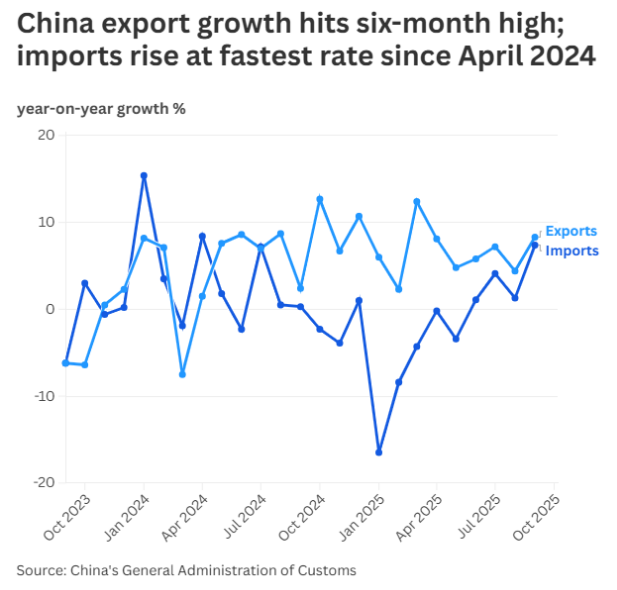
China’s exports rose at the fastest pace in six months during September, exceeding market expectations. Many exporters have adapted to ongoing U.S. tariff measures by rerouting shipments through Vietnam and ASEAN markets, which have seen a significant increase in Chinese-origin goods. Vietnam reported a 24.5% rise in imports from China, highlighting Southeast Asia’s growing role as a transshipment hub. Meanwhile, exports to the European Union rose by 14.2%, and shipments to the Association of Southeast Asian Nations (ASEAN) increased by 15.6% year-on-year. (Source: DSV Market Update, Page 6)
Severe Congestion Across European Ports
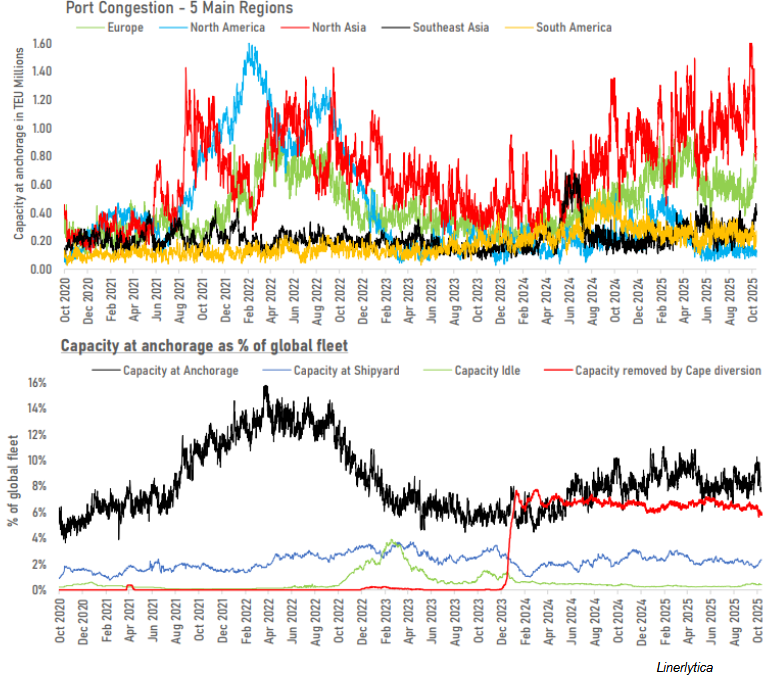
Port congestion continues to challenge European logistics operations, particularly in Antwerp and Rotterdam, where labour strikes and adverse weather conditions have caused prolonged disruptions. In mid-October, the Rotterdam District Court temporarily suspended a strike by container lashing workers, while maritime activity at the Port of Antwerp-Bruges was halted as pilots joined nationwide industrial action. These factors have extended vessel waiting times, reduced port productivity, and added pressure to already constrained European supply chains. (Source: DSV Market Update, Page 11)
US De Minimis Ban Alters Air Cargo Dynamics
The recent U.S. de minimis import restrictions are reshaping global air cargo flows, prompting carriers and shippers to adjust routing and capacity strategies. E-commerce and high-value shipments have increasingly shifted through alternative gateways to avoid regulatory constraints. Despite these shifts, global international air cargo capacity increased by 6% year-on-year, supported by additional freighter deployment and resilient demand along Asia–Europe trade corridors. (Source: DSV Market Update, Page 34)

Operational Excellence in Action
No Challenge Too Big: Moving Oversized Freight from the U.S. to Norway
This month also highlighted the successful completion of a complex logistics project for one of our major global technology customers. The assignment involved multiple shipments of specialist and oversized equipment from the United States to support the construction of a new data centre in Norway. Among these, one critical shipment stood out — 8 tonnes of chilled data centre doors that had to travel more than 6,000 kilometres by air within just six days. This project demanded precise coordination, customs compliance, and seamless last-mile delivery. Through our strategic partnerships with DHL, DSV, CP, and NIC, we secured priority capacity, maintained full visibility, and ensured timely delivery under tight deadlines. This success underscores our ability to deliver complex, time-critical international freight solutions, combining strong carrier relationships with expert coordination and cross-functional collaboration. It also reflects the dedication of our teams in consistently delivering value and reliability for our customers.
Summary
– China’s export sector remains resilient, leveraging regional diversification to offset tariff pressures.
– European port congestion continues to disrupt trade flows, requiring proactive capacity and routing management.
– The U.S. de minimis policy is driving structural changes in air cargo routing, especially within e-commerce sectors.
– Strong partnerships and coordinated teamwork remain central to delivering reliable, high-performance logistics solutions.
James Cooney, Head of Logistics & Inventory